
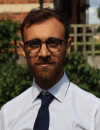
At the ABN 2024 conference, ACNR Publisher Rachael Hansford spoke to a variety of delegates to get their views on current issues in neurology. In this interview, ABNT Chair Richard Rees discusses the Shape of Training and prodromal Parkinson’s disease
Rachael Hansford
The first thing for us to talk about is the shape of training. It’d be really interesting to hear your thoughts on how it’s working out.
Richard Rees
Yes so shape of training has been an interesting journey. There’s been a lot of uncertainty at every stage, but I think that uncertainty is now starting to settle. So the ABN initially made some very strong recommendations to the GMC that the neurology community can best serve the NHS, and our patients, by providing front door acute neurology and stroke. But the ultimate decision was that neurology would, in order to remain what’s called a group one specialty, like every other group of physicians, we would have to train in general medicine as well as neurology, and that there wouldn’t be compromise on that.
So the ABN, along with the training programme directors, forming the specialty Advisory Committee for the JRCPTB, which is the Joint Royal Colleges of Physicians Training Board, looked again at the neurology curriculum, and we basically rewrote it from scratch, building on the previous curriculum, but having to fit it into the requirements for GMC, for how the curricula had to be designed. And that allowed us to relearn and refresh what was out there. And that was actually a useful opportunity for us, and that had buy-in from neurologists all over the country. That was then approved by the GMC, and in 2021, I think, shape of training was rolled out.

So now instead of instead of the previous system, where you would do your two years of the foundation programme, two years of core medical training, and then five years of neurology training – you now do your two years foundation training, then three years of the internal medicine, the first part of internal medicine training, and then the second part of internal medicine training, with your neurology sub-specialisation. That includes ongoing general medicine alongside neurology in order to make sure that when you finish all your training, you’re a fully competent general physician, as well as a fully competent neurologist – in no more time, which has its challenges. We’re now currently in a state of flux, where we have some trainees who are on the old system, and some trainees who are on the new system. And it’s actually going better than everyone I think was concerned it might go, thanks in large part to that the huge amount of work and effort being put in by the training programme directors, and the trainees up and down the country, to make sure that it does work, because what we all want to do is provide the best care we can for our patients.
Rachael Hansford
So it’s only been going for two years though? It’s quite early days.
Richard Rees
Yes, no one’s come out the other side yet. It’s still unclear when people do graduate from their training, whether hospitals will want to employ them as general physicians and neurologists, or whether they will just want them to be neurologists with subspecialty interests, or how academia continues to fit in, because neurology isn’t an academic specialty. But alongside that there’s also a growth that in large part has been pushed by the ABN in clinical sub specialist training and through fellowships, which is a really new area for UK neurology.
Rachael Hansford
So do you feel like the ABN has had a really important role to play in this new shape of training and forming it, and getting what future neurologists want?
Richard Rees
Yes, both getting more what future neurologists want, but more importantly, what the future in neurology patients need from the system, and how we can help maintain the NHS to be as efficient as it can be, and try to predict what the needs of the NHS are going to be for the next 50 years – it’s is an incredibly hard thing to do. But the ABN have really been at the forefront of making sure that neurology training is world class.

Rachael Hansford
Other specialties, when they do training, do they have to do general medicine as well?
Richard Rees
So neurology always used to be a bit of an outlier. It used to be that if you were a gastroenterologist, or infectious disease specialist, or endocrinologist, you would do general medicine all the way through. Neurology never was. In some countries, neurology is completely and utterly separate from other kinds of physician training schemes. In the US, you do a year as an intern after med school, then you do pure neurology for three years and then you’re done. As opposed to most other physician things when you’re doing internal medicine residency, and then you do your further subspecialty training.
Rachael Hansford
Okay, it wasn’t that radical a departure, like it seemed to me. When I first heard about it, I thought, why would they want to make them do that?
Richard Rees
That still remains a question. Because if I want to be, let’s say, a general neurologist, with a movement disorder subspecialty interest, I need to maintain up to date knowledge of all the growing therapeutics in all the areas of neurology, and be at the top of my game as a sub specialist. And then if I also have to maintain my competence, and remain up to date in acute asthma, gastrointestinal problems, and cardiological problems, and all the things, I don’t quite know how there are going to be enough hours in the day to be able to do that, what that job plan would look like or anything else. So I think there are still a lot of questions to answer. And I don’t think anyone is able to answer them. And actually is it efficient from a public finance perspective – is it efficient to employ me to do all of those three things? Or would it be much better for me to do just the neurological bits, because that’s what I’m good at, rather than not being very good at treating someone’s grandmother who’s fallen and broken her hip, and needs the medical aspects of that care delivered.
Rachael Hansford
Especially when we’re so short of neurologists…
Richard Rees
We’re very short of neurologists.
Rachael Hansford
Talking of neurology then, it’s an exciting place to work which hopefully will encourage more people to work in neurology. You were talking earlier about your feelings about what an exciting specialty it is. What drew you into it?
Richard Rees
I can’t imagine a better job. I genuinely love my job. Even on the days where I’m a little bit tired and grumpy, I am excited about getting out of bed every morning to go to work. The access we have to really help people in their everyday lives and make them better. And at the moment, there still aren’t a lot of cures for a lot of neurological conditions. But that doesn’t mean we can’t make people better. And we can radically improve their lives – be that the crippling effects of migraine that stops a person in their 30s from having a productive life. Or at the very other end, of the end of life, or someone with a degenerative disease like Parkinson’s, actually, we can completely alter the way they live their life for the better. And that’s a real privilege.
Neurology is also really exciting because it’s got the young and the old. It’s got very fast diseases like stroke, and infectious neurological disorders, through to decades long, lifelong conditions. And in fact, now, there are conditions that we are completely changing, such as spinal muscular atrophy, which used to be a condition that a neurologist wouldn’t see. Because often children never made it to adulthood, or there wasn’t anything we could do once we had made the diagnosis. Now these children, who probably would have died in early life are making it to adulthood in an incredible way that needs ongoing treatment and management.
And the other absolutely exciting thing about neurology is that other people could potentially look at neurology and say oh, you spend a lot of time making clever diagnoses, but then there’s not much you can do. And actually that’s a totally outdated idea of what neurology is, and even since I was a medical student conditions like MS where we had interferons steroids, that’s about it. Now we’ve got a vast arsenal of medications, and ways of really, almost stopping the disease in its tracks, maintaining people’s independence, and physical and cognitive and mental abilities for decades, if not the rest of their life. We are on the cusp of disease modifying treatments of neurodegenerative diseases, that is the exciting thing that everyone’s talking about at the moment. But we need to figure out how we’re going to design services for those treatments.
Looking at the Alzheimer’s treatments in particular, how are we going to identify patients, give the treatment safely, monitor the safety aspects of the disease without bankrupting the whole of the UK? These are real questions that we don’t have answers to at the moment. And it’s actually the neurology community in the UK that are going to be figuring out the answers to that. But I think it even goes further than that. And if we think about neurodegeneration, which is something which is an area that I’ve done research in and Parkinson’s in particular, trying to find ways of having that debate, not just within the silo of the neurology community, but actually take that debate to the public, to government, International. It’s a really exciting time to be a neurologist.
Rachael Hansford
You touched earlier on the multidisciplinary team as well, and the increasing importance of that.
Richard Rees
Yes I think that again, the old days of a neurologist sitting in a clinic, and making a pronouncement and that being that, fortunately, are also long gone. And the care that we deliver, is done as a team, and that makes the job so much more rewarding, but also makes it so much more effective for our patient. And working with Parkinson’s nurses, or in multidisciplinary meetings with surgeons and other kinds of physicians in the MS world as we understand more of the immunology working with other other specialists in other areas. But also working with the specialist nurses, and the physiotherapists, and stroke is a brilliant example of that and how we have completely changed what it means to have and survive and thrive after a stroke, through specialists skilled nursing, early physiotherapy, occupational therapy, speech and language, actually, whilst we’ve got new treatments and we’ve got thrombectomy, where we’re working with interventional neuroradiologists, and neurosurgeons. But also, it’s actually the really good nursing, and the other therapists that are keeping patients alive in the early phase and allowing them to thrive as they recover from their stroke. And that, that only works by fantastic teamwork. Each member of which is essential to deliver the best possible care to our patients.
Rachael Hansford
That’s great, because all those people are reading ACNR as well. I wanted to ask you about your research. You’ve just published a paper in Neurology?
Richard Rees
Yes. I spent three years working on the Predict PD study, which is a study based at UCL and Queen Mary University. And what we’re trying to do is, we know that Parkinson’s diagnosis only happens in a clinic, and for a diagnosis of Parkinson’s, you need slowness of movement, or bradykinesia, along with at least one of tremor rigidity. But through work done by the Neurological Alliance, we know that people who go on to get a diagnosis of Parkinson’s have seen their GP probably at least five times with complaints that ultimately are directly due to Parkinson’s disease. They’ve then had a referral to neurology, and given how few neurologists there are, that might mean and we all know the state of the NHS at the moment, that might be months of waiting for an appointment. And then you’ll have a history of examination that leads to the diagnosis of Parkinson’s.
So even from that, we know that Parkinson’s starts before the diagnosis. But actually through work that’s been done in the UK and across the world, we know that actually, the start of Parkinson’s happens probably at least 10 years before diagnosis, and around half of the dopamine, the dopaminergic neurons in that particular part of the brain that’s first effective have died by the time you get your diagnosis. So going back to the idea of trying to modify or stop the progression of Parkinsons, waiting until someone’s got relatively advanced disease is probably too little too late, and we can look at other diseases, be that infections, where early treatment means better responses, cancer, where early treatment means it’s not going to progress and metastasise through the body.
The start of Parkinson’s happens probably at least 10 years before diagnosis, and around half of the dopamine, the dopaminergic neurons in that particular part of the brain that’s first effective have died by the time you get your diagnosis.
The same axiom probably holds true for neurodegenerative diseases as well, where you can hold the disease early,or intervene early to slow the progression of the disease, then people remain independent for far longer. And actually what really matters to patients, what matters to their families, is their ability to live independently at home, be productive, be an active grandparent to their grandchildren, be a thriving and an engaged member of society, rather than what nobody wants, from the individual to the taxpayer, which is incredibly expensive and burdensome, nursing home placement, that’s kind of that’s not where anyone wants to be. And if we can intervene early, then maybe we can prevent that from happening.
But then there’s another question, which is, if we’re diagnosing somebody with what we call prodromal Parkinson’s, this is the phase where there is Parkinson’s disease, but it hasn’t got to the point of that slowness of movement with stiffness or tremor, then there’s actually a lot of uncertainty there. And the article that I’ve published, looks at this concept of, of diagnosing prodromal Parkinson’s through the lens of medical ethics. And going through looking at four principles (medical ethics has a lot of principles) but especially four key ones, since the 1970s, of beneficence, so that’s doing good by the patient. So what are the opportunities where you can help a patient by telling them that they have prodromal Parkinson’s. Non maleficence, so not causing the patient harm. And that could be physical harm through treatments that might make them worse, but also, there’s the anxiety and the angst, and the existential crisis that you could potentially inflict by giving them this diagnosis. Autonomy, and actually understanding that people have a right to know what is happening to them, but they also have a right to not know what’s happening to them. And not everyone wants information in the same way, at the same time, in the same manner. And then Justice. If you look at kind of where we are with lecanemab and Alzheimer’s now, what’s that going to mean in 10/15/20 years when we do have effective disease modifying treatments for Parkinson’s? The affordability of that? Actually, have we sought out the voice of people who aren’t typically represented in research, people from underserved communities, people from countries where research isn’t often done or published in big journals? Have we been asking men? Have we been asking women? Have we been asking people from across the socioeconomic spectrum? Because one size doesn’t fit all. And I think that the ultimate conclusion of the article was, this needs to be a highly highly individual approach, based on where the patient is in their life, and how they want to receive information and move forward.
Find the article at https://pubmed.ncbi.nlm.nih.gov/38759130/
