Author: anna_acnr

Iron Over Dopamine? Restless Legs Syndrome Guidelines Revamp

To reduce the risk for complications, the use of dopaminergic agonists in the treatment of severe restless legs syndrome (RLS) has become less common.

RLS is characterised by an irresistible urge to move the legs, often accompanied by unpleasant sensations such as itching, tingling, or electric paresthesia, which typically affect the lower limbs. It affects 8% of the French population, predominantly women.

New guidelines from the American Academy of Sleep Medicine (AASM) no longer recommend the use of these drugs as first-line treatments.

During the recent French Language Neurology Days in Montpellier, France, Sofiène Chenini, PhD, a researcher at the Sleep-Wake Disorders Unit, Department of Neurology, Gui-de-Chauliac Hospital, reviewed the current treatment approaches for RLS and highlighted non-dopaminergic alternatives. He cautioned that dopaminergic agonists could lead to the augmentation and worsening of symptoms over time.

In France, RLS is guided by the 2019 recommendations of the French Society for Sleep Research and Medicine (SFRMS), which still supports the use of dopaminergic agonists for the most severe cases of RLS.

“For now, we have not updated the guidelines, but we are considering it,” said Chenini, referring to the new American recommendations.

Iron as First Line

According to the new AASM guidelines, intravenous iron supplementation is the preferred first-line treatment for severe RLS. In some cases, second-line antiepileptic drugs are considered a first-line treatment option in French recommendations when the severity is low.

Join our online community at forums.acnr.co.uk

These sensations of restlessness typically occur in the evening or at night during periods of rest or inactivity and are temporarily relieved by movement, such as walking and stretching. The condition often leads to repeated leg movements during sleep and difficulty falling asleep due to increased brain activity.

RLS is not fully understood but is often linked to problems with iron regulation.

MRI studies have shown iron deficiency in the brains of patients with RLS. This suggests a disruption in iron transport across the blood-brain barrier and into neurons, possibly due to a decrease in the transferrin receptor.

This disruption in iron regulation, believed to have a primarily genetic origin, induces an increase in the synthesis of dopamine and glutamate, which is likely the cause of the symptoms. In RLS, changes in the dopaminergic system are linked to risk factors such as aging and the use of certain medications.

More information can be found here

Mary Reilly receives AANEM’s 2025 Honorary Member Award

The American Association of Neuromuscular & Electrodiagnostic Medicine (AANEM) has announced that Dr Mary Reilly, MD has received the 2025 Honorary Member Award for her scientific contributions and unwavering commitment to improving patient care in neuromuscular medicine.

Dr Reilly graduated from University College Dublin in 1986, earned her Doctor of Medicine in 1996, and was awarded Fellow of the Royal College of Physicians (FRCP) in 2002 and Fellow of the Royal College of Physicians of Ireland (FRCPI) in 2003. In 1998, she was appointed as a Consultant Neurologist at the National Hospital for Neurology and Neurosurgery, Queen Square, London, and later became a Professor of Clinical Neurology at University College London (UCL) in 2010.

Currently, Dr Reilly leads the peripheral nerve clinical and research group and serves as head of the division of clinical neurology at the UCL Queen Square Institute of Neurology. Her research focuses on inherited neuropathies, covering gene identification, disease mechanisms, outcome measure development, and clinical trials. She has held key leadership roles in several professional societies and was elected Fellow of the Academy of Medical Sciences in 2020 and of the European Academy of Neurology in 2023. Dr Reilly will be recognised at the upcoming AANEM Annual Meeting, which is being held from the 29th of October until the 1st of November 2025, in San Francisco, California.

Join our online community at forums.acnr.co.uk

Teva leads call to secure Europe’s access to critical medicines and protect health sovereignty

Speaking at the Medicines for Europe Annual Conference, Michal Nitka, SVP Head Generics Europe & Global Head OTC at Teva Pharmaceuticals, highlights the essential role of a resilient, competitive, and environmentally sustainable pharmaceutical industry in safeguarding patient access to medicines and strengthening Europe’s healthcare sovereignty. While advancing its innovative portfolio of medicines, Teva strongly believes in the vital role that generics and biosimilars play in supporting millions of patients across Europe.

“A strong, competitive, and sustainable pharmaceutical sector is vital not just for economic growth, but to protect patients across Europe,” says Mr Nitka. “Producing in Europe, means building a secure, future-ready healthcare system that works in the best interest of every patient.”

As the EU debates the Critical Medicines Act and other legislative efforts to secure supply and strategic autonomy, Teva is calling for forward-looking solutions to improve medicines supply across Europe:

Support European Manufacturing to Secure Supply: Building and maintaining strong pharmaceutical production in Europe is essential to securing the stable supply of critical medicines and building greater resilience against external geopolitical shocks. Procurement policies should treat manufacturing as a strategic asset for Europe and fully adopt multi-winner and multi-criteria tenders, rewarding those contributing to Europe’s resilience, transformation and competitiveness.

Advance a Unified Approach to Stockpiling and Data: A harmonised EU solidarity mechanism, supported by improved data sharing, is essential to reduce stock imbalances and promote the movement of medicines across the EU for a more stable and secure supply. Stockpiling is not a one size fits all solution. It should only be applied selectively, following thorough vulnerability assessments.

Unlock Supply Flexibility Through Digital Innovation: Embracing digital tools and AI can improve the flow of medicines across EU borders, helping to deliver faster, more flexible access for patients. Advancing e-leaflets and standardised packaging is a key step to achieving this.

Strengthen Existing Manufacturing Capabilities and Expertise: Europe’s future health security relies on sustaining and growing its existing manufacturing base.  Smart and accessible funding mechanisms are urgently needed to retain and expand manufacturing expertise and ensure Europe stays competitive and innovative in a global market.

Teva is committed to continued investment in European production, research and development, innovation, and jobs – while upholding the highest regulatory standards and environmental responsibility.

Despite a 30% rise in average consumer prices over the past decade, the average list prices for generic and biosimilar medicines have declined by 8%. Combined with challenging and complex regulatory pressures and cost inflation, this imbalance threatens the industry’s ability to produce critical medicines in Europe. A fairer balance between regulatory burden and economic viability must be restored.

Learn more at www.tevapharm.com

Christian Langkammer is awarded an ERC Consolidator Grant

Christian Langkammer from the Department of Neurology at the Medical University of Graz has been awarded an ERC Consolidator Grant – one of Europe’s most prestigious research funding programs, granted solely on the basis of scientific excellence. The €2 million funding will enable him to further expand his research group in the coming years. With this grant, he will realise the project “WhatsMRI – Elemental and Structural Composition underlying Brain MRI,” which explores fundamental biophysical mechanisms underlying magnetic resonance imaging (MRI).

Dr Christian Langkammer

Christian Langkammer is an Associate Professor at the Medical University of Graz. His academic career includes a PhD from Graz University of Technology and an Erwin Schrödinger Fellowship at the Martinos Center of Harvard Medical School in Boston. His research focuses on quantitative magnetic resonance imaging (MRI), particularly brain iron mapping and the development of methods for quantitative susceptibility mapping (QSM), as well as focusing on the myelin sheath—a protective and insulating layer surrounding nerve fibers. This plays a critical role in the rapid and efficient transmission of electrical impulses and is essential for motor, sensory, and cognitive functions. The myelin sheath consists of a specific arrangement of lipids and proteins, with its composition and structure being crucial to its function. Changes in myelin, such as occurring in neurological diseases like multiple sclerosis or during the process of healthy ageing, can be assessed using MRI. However, systematically validated insights into how chemical and structural variations influence quantitative MRI images are still lacking – a knowledge gap that will be addressed in his research.

To better understand quantitative MRI measurements, Christian Langkammer is taking an unconventional approach: combining post-mortem MRI images of human brains with cutting-edge analytical methods such as laser-ablation mass spectrometry (for chemical analysis), synchrotron X-ray scattering (for studying material structures), and high-resolution microscopy techniques, alongside mathematical modeling and simulation. “The aim of this work is to create a detailed model linking microstructural (histological) properties of the brain to quantitaitive MRI parameters, and particularly to better understand and numerically describe pathological brain alterations in neurological diseases”. Additionally to fundamental insights into the biophysical mechanisms of MRI, this project will also establish a publicly accessible chemical and structural atlas of the human brain—a valuable tool for research fields beyond MRI.

More information about this award can be found here.

2024 Tom Isaacs Award honours Parkinson’s expert Professor Oliver Bandmann

Cure Parkinson’s and Van Andel Institute (VAI) have announced Professor Oliver Bandmann as the winner of the 2024 Tom Isaacs Award, which honours researchers who closely collaborate with the Parkinson’s community.

The award was virtually presented to Professor Bandmann as part of the annual Grand Challenges in Parkinson’s Disease symposium and parallel Rallying to the Challenge meeting for people living with Parkinson’s held in Grand Rapids, Michigan in September.

Professor Bandmann is Professor of Movement Disorders Neurology and Co-Director of the Cross-Faculty Neuroscience Research Institute at University of Sheffield, UK. His research is focused on discovering new treatments with the potential to slow, stop or reverse Parkinson’s.

Professor Bandmann’s research group screened a library of 2000 compounds in patient tissue to identify promising compounds, including ursodeoxycholic acid (UDCA), a drug already in use to treat liver disease. Work by Professor Bandmann suggests UDCA may also address mitochondrial dysfunction in Parkinson’s models. The team were able to take UDCA to clinical trial at phase 2, and results were positive; the trial met its primary outcome and showed UDCA to be safe and well tolerated, with participants on the drug showing consistent improvement of gait. UDCA is now moving forward to the next stage of clinical testing.

Professor Bandmann also investigates non-motor symptoms of Parkinson’s, particularly the common symptom of pain. He is widely published, with eight articles in the prestigious journal Brain alone.

Professor Bandmann is a clear example of the very essence of the Tom Isaacs award, which was set up in memory of Cure Parkinson’s late co-founder and President. The award recognises a researcher who has significantly impacted the lives of people living with Parkinson’s and has involved people with Parkinson’s in a participatory way in their work. Professor Bandmann runs two movement disorders clinics every week and is the Movement Disorders Service Lead at Sheffield Teaching Hospitals, a role through which he has worked to improve the service for patients and training for Parkinson’s nurses. Under his leadership, a regional shared care protocol for Parkinson’s drugs was developed and implemented across South Yorkshire which has dramatically simplified and standardised the availability of primary care drugs for Parkinson’s. 

As a National Neurosciences Advisory Group (NNAG) Lead for two years, Professor Bandmann took on feedback from public and patient consultations. He worked to develop a new pathway which emphasised the importance of a timely and well managed diagnosis for people with Parkinson’s and other movement disorders, and subsequent regular access to healthcare professionals. He worked to improve accessibility for people with Parkinson’s, encouraging healthcare providers to embrace novel ways of working such as digital monitoring and remote appointments where appropriate.

Professor Bandmann also served as the President of the Doncaster branch of Parkinson’s UK, and has been involved in several awareness raising and community outreach campaigns.

WFNR Franz Gerstenbrand Award 2024 Winner

Dr Christian Endisch, a physician with a neurology residency at the department of Neurology and Experimental Neurology Charité Universitätsmedizin in Berlin, Germany, is the winner of the 2024 World Federation of Neurorehabilitation (WFNR) Franz Gerstenbrand Award.

Announced this month at the 13th World Congress for Neurorehabilitation in Vancouver, Canada, Dr Endisch said: “I’m delighted to receive the WFNR Award for this research that will aid the prediction of recovery of comatose patients after resuscitation from cardiac arrest. The prize will fund travel to conferences to further my knowledge in this area.”

Dr Endisch’s team conducted a retrospective, international, multicentre study of 706 comatose cardiac arrest (CA) patients and looked at their cortical somatosensory evoked potential (SSEP) amplitudes using a standardised evaluation pathway.

After resuscitation from a CA, one of the first steps of neurorehabilitation is to identify as soon as possible whether comatose patients are likely to benefit from further life-sustaining therapy and long-term rehabilitation.  SSEPs are one of several prognostic parameters used in the international neuroprognostication guidelines for these patients. Previously, the prognostic value was limited to categorising cortical SSEPs as either bilaterally absent (indicating poor outcome) or present (outcome uncertain), resulting in neuroprognostication remaining unclear in many comatose CA patients.

The results of Dr Endisch’s study, published last year [1], showed that bilaterally absent and cortical SSEP amplitudes below 0.5 µV reliably predicted a poor outcome and  high cortical SSEP amplitudes were likely to indicate the absence of severe brain injury.

As a result of Dr Endisch’s findings comatose CA patients will benefit from either the continuation of treatment and neurorehabilitation in the absence of severe brain injury, or the withdrawal of futile therapy for those with severe brain injury and no long-term prospect of regaining consciousness.

This is an extremely important study emphasising the importance of prognostic SSEP recordings throughout the neurorehabiliation process from admission or at a later stage. The WFNR congratulates Dr Endisch and his team; this research will aid the difficult decisions around treatment continuation for these patients.

Reference

1.     Aalberts N, Westhall E, Johnsen B, Hahn K, Kenda M, Cronberg T, Friberg H, Preuß S, Ploner CJ, Storm C, Nee J, Leithner C, Endisch C. Cortical somatosensory evoked potential amplitudes and clinical outcome after cardiac arrest: a retrospective multicenter study. J Neurol. 2023. Dec;270(12):5999-6009. https://www.doi.org/10.1007/s00415-023-11951-4. Epub 2023 Aug 28. PMID: 37639017; PMCID: PMC10632270.

Dravet Syndrome and SCN1A-related epilepsies

New study aims to transform understanding

The ‘SCN1A Horizons Natural History Study’ is anticipated to be a milestone in transforming understanding of SCN1A epilepsies, including Dravet Syndrome, one of the most complex and severe developmental and epileptic conditions. The nationwide study aims to define the seizure, neurodevelopmental, and behavioural characteristics of SCN1A-related epilepsies in 400 children and adults over a period of three years, with the goal of improving and standardising care across the UK.

Dravet syndrome: Chief Investigator, Professor Andreas Brunklaus
Chief Investigator, Professor Andreas Brunklaus

Chief Investigator, Professor Andreas Brunklaus, a Consultant Paediatric Neurologist based at the Royal Hospital for Children, University of Glasgow, announced the launch of the study at the Dravet Syndrome UK Conference in London. “The study welcomes any patients with an SCN1A mutation including children and adults, regardless of disease severity or treatment regime”, he stated. “Glasgow is the first site to launch, recruiting initial patients this week. From January 2024, recruitment will roll out UK wide, across 27 paediatric and adult clinical sites in Scotland, England, Wales & Northern Ireland”.

SCN1A-related epilepsy occurs in around 1 in 12,500 live births in the UK, with Dravet Syndrome occurring in 1 in every 15,000. Despite advances in research about Dravet Syndrome, there remain many important unanswered questions, such as the impact of anti-seizure medications, neurodevelopmental and behavioural comorbidities, and mortality rates (Dravet Syndrome has a higher risk of SUDEP compared to other epilepsies). Using a prospective data collection design, the SCN1A Horizons study will inform a better understanding of the condition and potential treatment options.

Professor Brunklaus added: “Natural history studies have a successful track record, for example in improving care and understanding of neuromuscular conditions. By systematically collecting data in detail and over an extended period, we can address many of the current unknowns in Dravet Syndrome and other SCN1A epilepsies. In addition, collecting data in a standardised way creates an opportunity to raise standards of care, not just in one centre but across the UK and beyond”.

Neurodevelopmental assessments are a key part of this study, informing knowledge beyond the clinical perspective and profiling the neurocognitive development of those with Dravet Syndrome and other SCN1A-related epilepsies over time. During these assessment visits, the research assistants will also collect self-reported data from caregivers, to give a deeper insight into the impact SCN1A-related epilepsies has not only on the individual but also on the families.

Galia Wilson, Chair of Trustees for Dravet Syndrome UK said: “We are very excited about the potential for the SCN1A Horizons Study offers to make a real and lasting difference to those affected by Dravet Syndrome. While there are promising treatments on the horizon, these do not address all aspects of living with this devastating condition. At Dravet Syndrome UK, our strategy is to support research that addresses the continued unmet needs of families. We are delighted to be co-funding this project, and to have announced its much-anticipated launch at our Conference”.

SCN1A Horizons is a non-commercial study, sponsored by the NHS Greater Glasgow and Clyde and funded by a combination of commercial and charity funding. Industry partners include Biocodex, Encoded Therapeutics Inc., Jazz Pharmaceuticals Inc., Stoke Therapeutics Inc. & UCB Inc. The project is also supported by grant funding from Dravet Syndrome UK and Dravet Syndrome Foundation.

For more information about the SCN1A Horizons Natural History Study, including information about participating centres, please contact the study team on SCN1AHorizons@glasgow.ac.uk.

For more information about Dravet Syndrome, including the opportunity to watch Professor Brunklaus’ presentation at the Dravet Syndrome UK conference, visit www.dravet.org.uk/events/dsuk-conference-professional-day/.

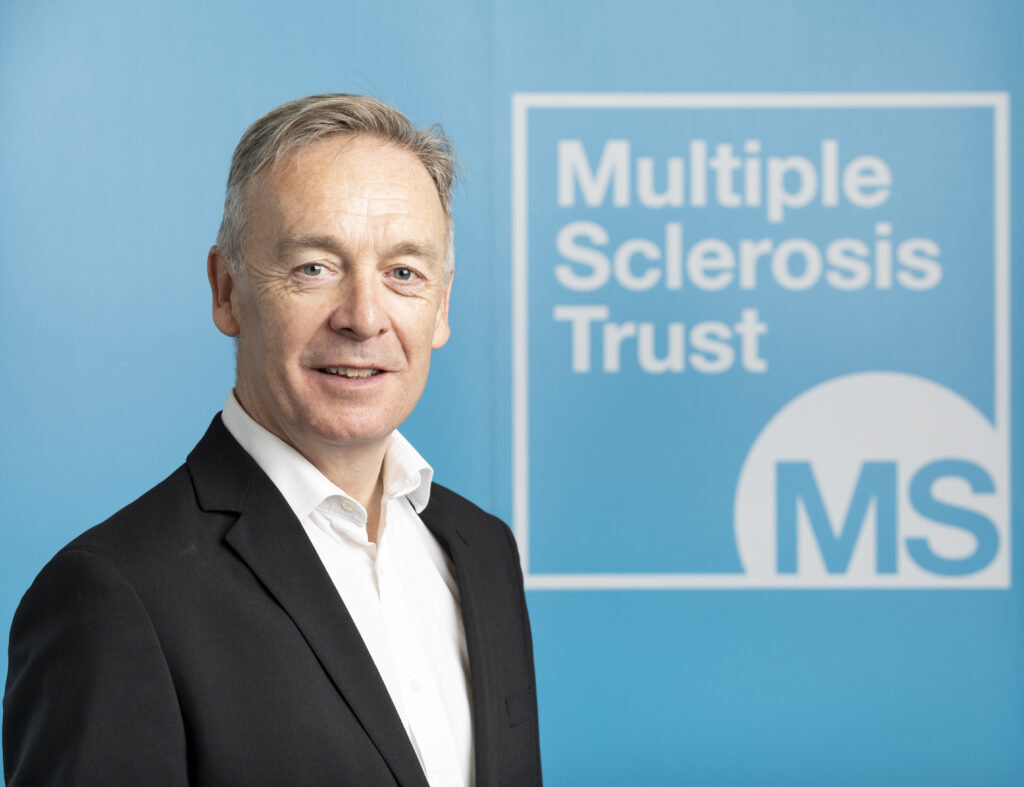
David Martin, CEO of the MS Trust to retire

David Martin has announced that following six years at the MS Trust, he plans to retire in early 2024.

During his tenure at the MS Trust, David has overseen the establishment of both the Specialist Nurse and the Advanced MS Champion programmes. Working closely with the NHS, these schemes place Specialist MS Health Professionals in areas of the UK which have the greatest unmet need. The results have directly improved the lives of thousands of people living with MS.

David also expertly steered the MS Trust through the overwhelming early days of the Covid pandemic. During this time demand for trusted information for people living with MS skyrocketed, while at the same time fundraising almost ceased overnight.

In his message to staff David said “The MS Trust is stronger now than at any time since the pandemic. We have financial stability, a strong leadership team, and a skilful and energetic group of staff who are passionate about helping people with MS.”

“Given our position of strength, it feels like the time is right for me to hand over the reins to this wonderful organisation and move on to the next stage of my life.”

Chair of Trustees Caitlin Sorrell said of the news “We are sad that David is moving on, but completely understand his motivations for doing so. He has shown fantastic leadership over his time with us, and the MS Trust is a stronger organisation thanks to his contributions.

The Board of Trustees and the management team at the MS Trust remain fully committed to maintaining our organisational values and providing trusted information to people living with MS, whilst funding more essential MS health professionals across the UK. Together we will continue to make sense of MS.

We will be launching our CEO recruitment process imminently and will announce the appointment once it has been made.”

For more information about the work of the MS Trust email comms@mstrust.org.uk

Karger Publishers Launches its Fourth Annual Vesalius Innovation Award to Advance the Future of Science

For the fourth consecutive year, Karger Publishers is seeking top-of-the-line applicants for its Vesalius Innovation Award. The award is aimed at early-stage startups in the Health Sciences and Publishing sectors that are developing innovative technological solutions with a significant impact in their respective fields.

This year marks the fourth year of the Vesalius Innovation Award, with a total of $25,000 in prizes to be granted to the top performers. The winner will receive $15,000, while the two runners-up will be awarded $5,000 each. 

The focus of this year’s competition is on knowledge communication, patient centricity, and artificial intelligence. Early-stage startups in the health sciences are encouraged to submit their award applications via the dedicated website, www.karger.com/via from May 15 to September 3. 

The judging panel is comprised of leading Health Sciences and publishing experts, who will evaluate the submissions and provide feedback to the participants. After the evaluation by the jury, the top five shortlisted startups will be invited to present their ideas at the STM Week in London in December. This is an excellent opportunity for the startups to showcase their innovations to a wider audience and gain valuable exposure. 

The Vesalius Innovation Award has been presented in collaboration with the STM Association since its inception, and the organisers are grateful for the continued support of Gold Sponsor Molecular Connections, new Silver Sponsor Park56, alongside the new partner Silverchair.